

















Nemely — CRM starts with us.

What are you looking for?

Browse all pages

Automation

Improve the process before you accelerate it.

When work keeps returning for correction, a faster handover may only move the problem around. Nemely helps you understand how a process actually runs, remove unnecessary friction and decide where automation will make a meaningful difference.

Two colleagues discussing an improvement beside a laptop in a warm orange workspace
Power AutomateProcess Mining

A few organizations we've worked with

Follow the work. Find the friction.

Combine what people experience with what the process data can show, then turn the findings into a manageable improvement.

Discovery and observation

The documented process is a starting point.

People often create workarounds to get a job done. We speak with the teams involved and walk through real examples to find repeated checks, unclear ownership and missing information. The aim is a shared understanding of the process that people actually follow.

Explore Process Design

Colleagues comparing papers and priorities during a working session

Microsoft Power Automate Process Mining

See where work waits and returns.

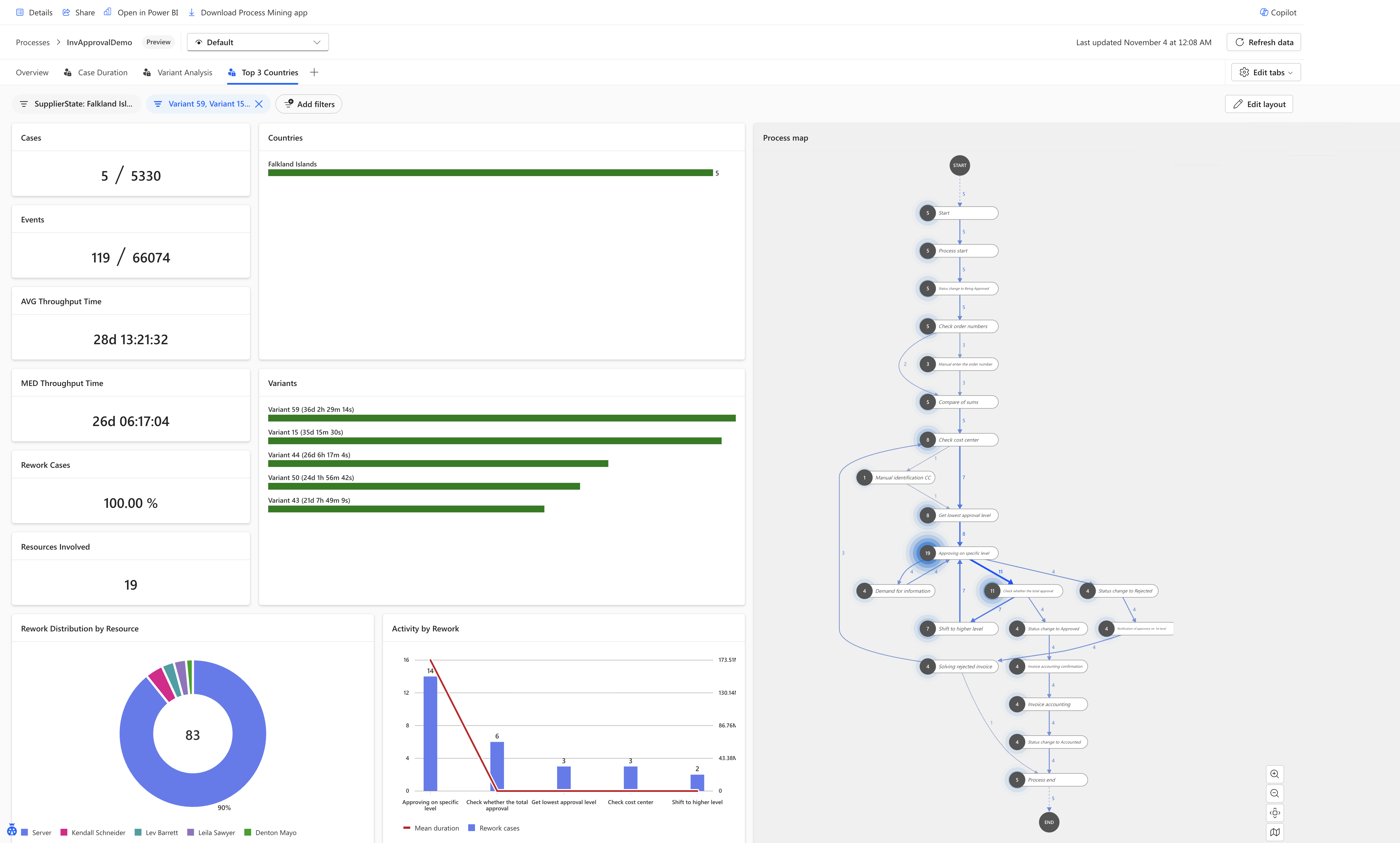
Power Automate Process Mining uses event data to help examine process paths, durations and rework. Microsoft’s process intelligence view combines these signals with a process map. We assess the quality of your event history and use relevant findings to test the assumptions from workshops.

  • Compare frequent paths with costly exceptions.
  • Check what the recorded events can—and cannot—explain.
Plan a process assessment
Microsoft process intelligence workspace displaying sample process metrics, variants and a process map

Microsoft’s process intelligence example, with sample metrics and process paths. The screenshot carries a Preview label; these figures are demonstration data, not promised business outcomes.

Microsoft Learn · process intelligence

Practical improvement

Turn a finding into a better working routine.

An improvement might remove a redundant check, clarify a decision or introduce a focused app. We prioritise changes with the process owner and agree how the result will be measured. Technology follows the redesigned process, with a pilot that lets the team learn before scaling.

  • Choose an improvement the team can explain.
  • Trial the changed process with clear ownership.
  • Compare the result with the original baseline.
Explore automation opportunities
Professional checking a mobile task in the workplace

How Nemely helps

From observation to an agreed improvement backlog.

We turn the assessment into decisions: what to simplify, what to automate and what needs better data before further investment.

Process DesignSystem IntegrationCustom Development

Set the process boundary

Agree where the process starts and ends, who owns it and which customer or operational outcome needs to improve.

Combine evidence and experience

Review available event data alongside interviews and real cases. Separate data gaps from patterns that support a change.

Trial and measure the redesign

Assign an improvement owner, establish a baseline and test the proposed routine before committing to a wider transformation.

FAQs

Your questions, answered.

What data is needed for process mining?

A useful event history links process instances to activities and timestamps. The exact fields depend on the analysis. We assess whether identifiers are consistent, events are complete and timestamps reflect the work you want to understand.

Can we start without suitable event data?

Yes. Interviews, observation and a sample of real cases can identify useful changes. We can also define the event capture needed for later analysis rather than treating missing data as a reason to postpone every improvement.

What is the difference between process mining and task mining?

Process mining examines recorded events across a process. Task mining examines how tasks are performed at the desktop. The choice depends on the question you need to answer and the evidence available; neither replaces discussion with the people doing the work.

What affects the cost and timing of process discovery?

The number of teams, process variants and systems involved, access to participants and the condition of event data affect the scope. We agree the question to investigate and the evidence needed first. Implementing the resulting changes is planned separately from discovery.

How do we turn process findings into useful changes?

Review the findings with the people doing the work and validate the causes of delays or rework. Prioritise a small set of changes, assign owners and agree how to compare results. Configuration, automation and training should follow the evidence rather than a target to automate every step.

Explore the Microsoft capabilities

Explore the Microsoft capabilities

Build for today. Keep a view of what comes next.

Microsoft is moving Dynamics 365, Power Platform and Dataverse updates to the AI at Work roadmap from September 2026. We use the current feature status when planning your solution, and evaluate previews separately before proposing them for production.

Explore Microsoft’s roadmap approach

Capabilities reviewed 8 September 2026. Licensing, configuration, language and regional availability vary by feature.

Your next step

Let’s make your next step concrete.

Describe the process that keeps taking longer than it should. Stefan can help you explore what to examine first and how to turn the findings into action.

Contact us
Stefan Christiansson, CEO & Solutions Architect at Nemely, beside a blue-framed window with a city backdrop
Stefan ChristianssonCEO & Solutions Architect

Get resource